After the evaluation by our judges, we are glad to announce:
(i) The winners of the English track/language:
DaSupremo – U$80,00 gift card
NanaYawBotar – U$50,00 gift card
TemiTaiwo – U$30,00 gift card
(ii) The winners of the Portuguese track/language:
Gotsoua – U$100,00 gift card
Elizmarinab – U$70,00 gift card
DaSupremo was a strong contender for first place overall. Still, by majority vote, Gotsoua ended up winning the overall prize, taking into consideration mainly the balanced contributions in both Wikipedia and Wikidata, focusing all his efforts on content directly related to Internet Governance and Youth, while also being a new member of the Wiki community, learning as he was going.
Sadly, most participants were not able to fill all eliminatory criteria. Nevertheless, since a few participants made meaningful contributions without filling all necessary criteria, we decided to provide a “consolation prize” of 10,00 USD. These participants are:
Unfortunately, we also had no relevant francophone participation at all.
All three EN winners had very relevant participation in the Wikicontest. NanaYawBotar in Wikidata, with a fantastic job with Internet Society chapters in Africa, and TemiTaiwo, who started with some mistakes but later made some outstanding contributions on Wikipedia. So, we decided to also add U$10,00 (value of the “consolation prize”) to their prizes.
Please, confirm that you have accepted the prize by messaging us at info@old.youthsg.org confirming your identity, with the preferred kind of gift card you would like to receive (we can work only with the most used ones, such as Google, Apple, Amazon, etc.)
Please also feel free to message us if you have any doubts.
We hope you will continue your engagement with the Wiki community and keep an eye out for new events!
The first one is that, after some tests, we realized that most newcomers were finding Wikibooks and Wiktionary too challenging to understand and edit correctly. Thus, we changed the platforms of the Wikicontest to Wikipedia and Wikidata.
Secondly, we decided to leave applications open to everyone until the end of the contest, to join whenever they can. But those that join early have more time to contribute and thus greater chances to win.
The introductory webinar will happen tomorrow (Sunday, May 16) at 18h00 UTC. As we have not had the request of at least 15 people in Spanish, Portuguese, or French, it will be in English only, but we will ask presenters to explain slowly for everyone to understand. Rules and how to edit efficiently will be presented by a Youth SIG Board member and by Alex Stinson and Melissa Huerta, from Wikimedia Foundation. You can ask for the link through our e-mail info@old.youthsg.org,
Those who have a hard time understanding spoken English can check the guides on “how to edit” available in the Wikicontest rules. Our email is also open for any questions in any of the four official languages of the contest. Feel free to ask us anything you want, including 101 explanations.
Update: You can access the Introductory Webinar at this link below in our YouTube channel
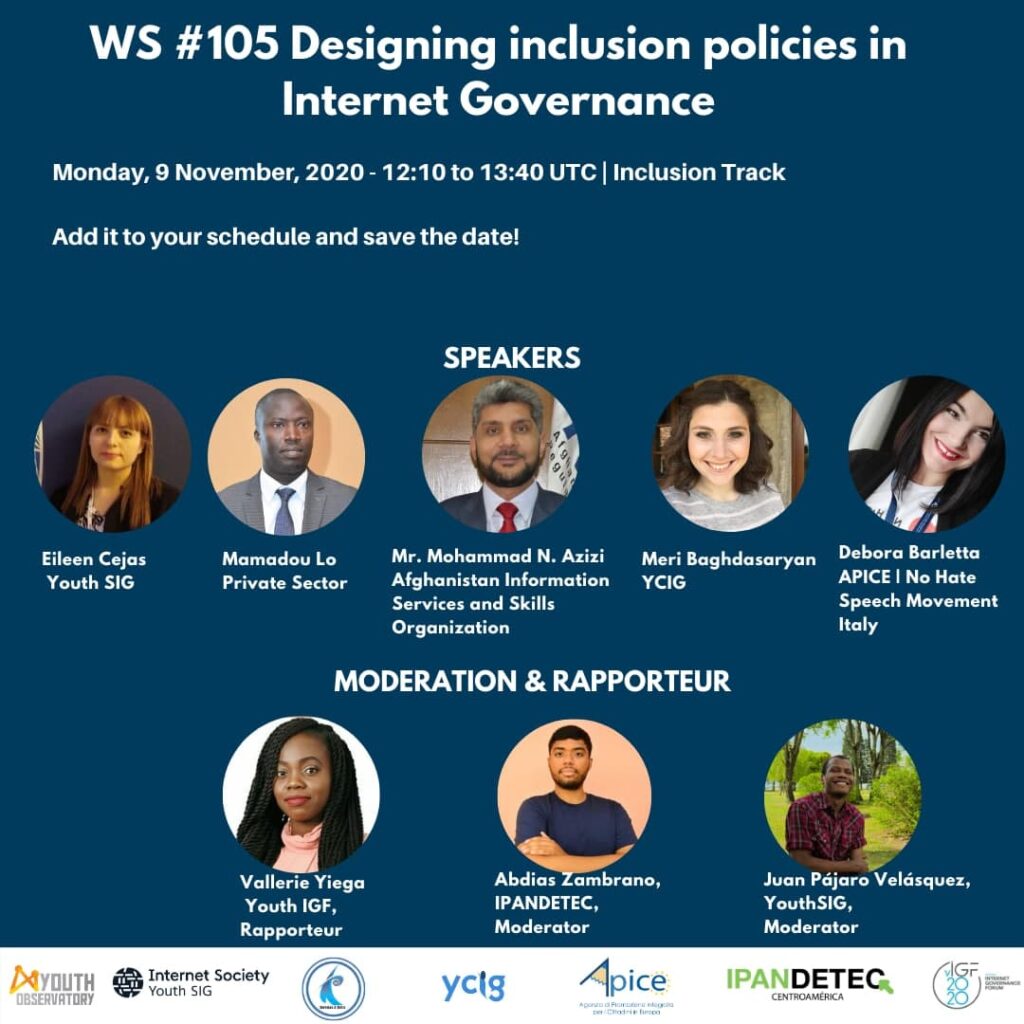
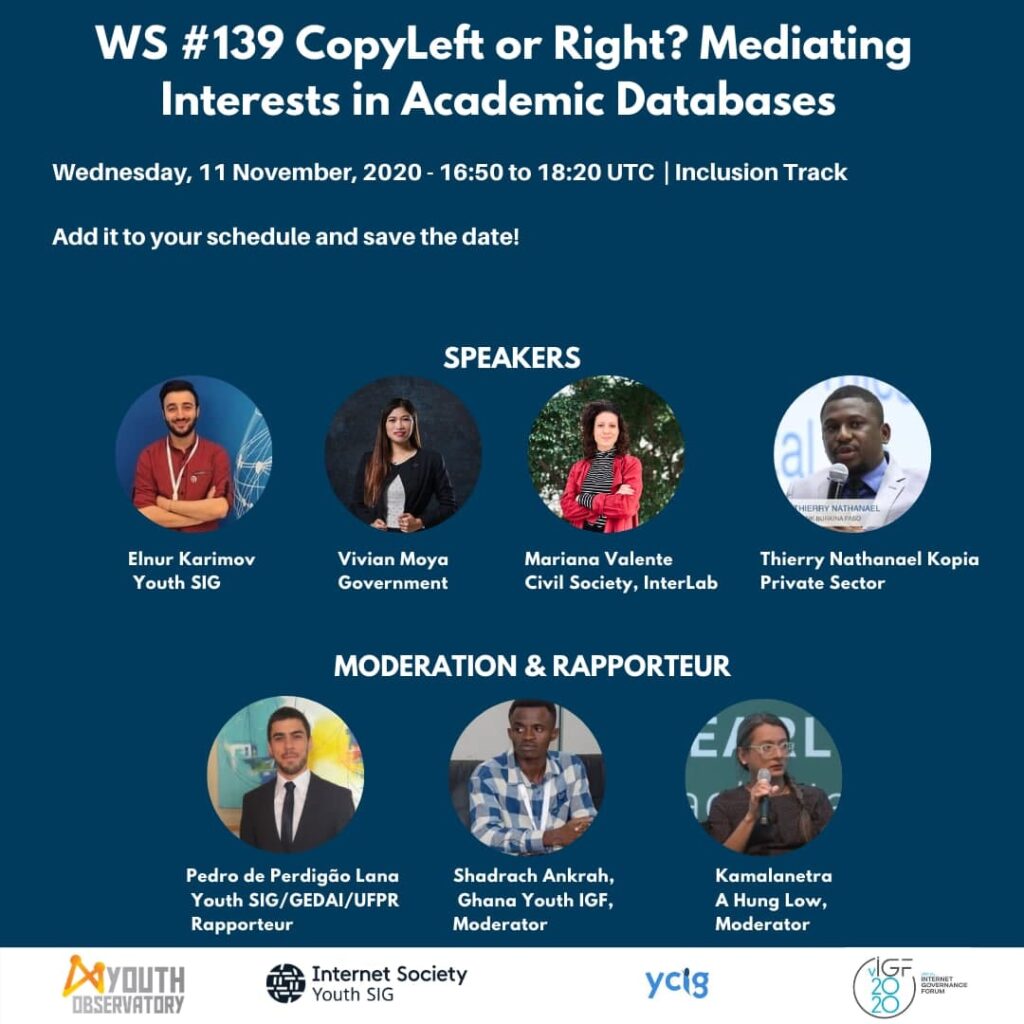
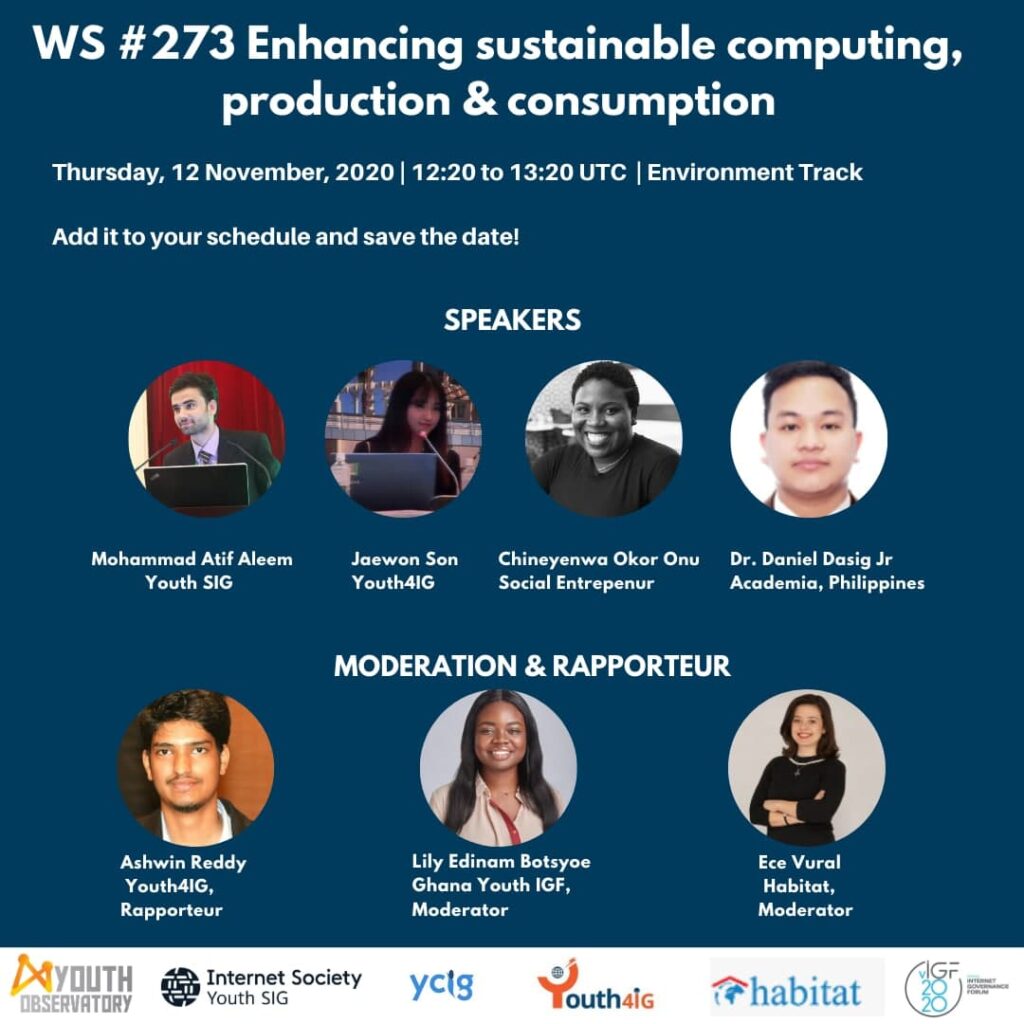
The Youth SIG in collaboration with the Youth Coalition on Internet Governance (YCIG) is going to host 3 workshops at the IGF2020. Read below the description of the sessions and save the date in your calendar!
Speaker 1: Mamadou Lo , Civil Society, African Group Speaker 2: Eileen Cejas , Civil Society, Latin American and Caribbean Group (GRULAC) Speaker 3: Mohammand N. Azizi, Government, Asia-Pacific Group Speaker 4: Meri Baghdasaryan, Civil Society, Eastern European Group Speaker 5: Debora Barletta, Civil Society, Western European and Others Group (WEOG)
Online Moderator:Juan Pajaro Velasquez, Civil Society, Latin American and Caribbean Group (GRULAC); Abdias Zambrano, Latin American and Caribbean Group (GRULAC).
The session will start with the short introduction of the speakers (20 minutes) where they will speak on key points of their countries’ region in terms of inclusion; followed by a group discussion in blocks regarding the 5 topics.
The discussion will include
1-. Gender perspectives impact on Internet matters related to policy drafting
2- Techniques to include people from rural, indigenous and remote areas into digital literacy.
3- Policy making processes centred around people with disabilities
4- Markets and Economic inequalities: when prices & taxes prevent people from being connected
5- Governments & human rights: guaranteeing our digital rights to include more voices connected.
After the presentation of each speaker, we will share a document where we will introduce 3 blocks with 2 topics (40 minutes).
Firstly, we will address the topic of “Gender perspectives in Internet Governance matters” and “Economic inequalities” where we will make 4 policy questions for each sub-theme;
then the second block we will discuss “the role of governments and human rights” and “digital literacy for marginalised communities”;
and the final block will be “analysing policies in disabilities matters” and a generally summary on “policy making processes in general”
Once we finish the second segment of the session, we will continue with the collective design of the online campaign, using a mind map the last 20 minutes of the session.This mind map will help us to design the campaign and therefore produce the outcome some weeks after the IGF2020 . The online campaign will be extremely important to raise awareness on young people towards inclusion in Internet Governance.
Speaker 1: Vivian Moya, Government, Asia-Pacific Group Speaker 2: Mariana Valente, Civil Society, Latin American and Caribbean Group (GRULAC) Speaker 3: Thierry Nathanael Kopia , Civil Society, African Group Speaker 4: Elnur Karimov, Civil Society, Eastern European Group
Moderator: Kamalanetra A Hung Low, Private Sector, Western European and Others Group (WEOG) Online Moderator:Shadrach Ankrah, Technical Community, African Group Rapporteur:Pedro de Perdigão Lana, Civil Society, Latin American and Caribbean Group (GRULAC)
Description: Mediation (90 minutes) The mediation will begin with the moderator/mediator’s opening speech that will touch the challenges and possible solution models to the open and affordable access to academic databases posed by intellectual property rights of both database owners and authors. Then, the moderator will introduce the mediating parties (speakers in the list below). The presentation delivered by each speaker will focus on the interest in academic databases as a particular stakeholder group and their recommended solutions and will help the audience to better understand the expectations of mediating parties (speakers). The speakers will represent government, private sector, civil society and the youth’s approach to open academic databases. In particular, the session audience will have an opportunity to listen to the perspective of the private sector and state authority on copyright protection, Creative Commons organization, and the youth on open access to databases. The first two speeches will be followed by a Q&A session both with online and onsite audiences who will address their questions to the speakers and contribute to the mediation. During the Q&A session, the moderator, with the help of the rapporteur, will collect the common/similar solutions raised by the speakers. After the Q&A session, the moderator will speak about the common points identified. The mediation will follow the same structure with the remaining two speakers. Finally, the moderator will collect all common points and add them in a final document which will symbolically be called “A Resolution Agreement”. The session will continue with the symbolic signature ceremony of the agreement by parties which will reflect the agreed policy, and conclude with the moderator’s closing remarks. Distinctively, this session will introduce a solution-oriented approach by not only listening to the speakers from different interests but trying to mediate them to reach a deal. The session is nurtured from the practical advantages of mediation methodology, which means that by mediation the session will reach its purpose of finding tangible outputs on open databases that will serve the interests of all stakeholder groups. The methodology will make the speakers think more practical and solution-oriented. The moderator will play a key role in facilitating discussions and bringing the parties closer. The intended agenda of the session is as follows: Opening speech by Moderator/Mediator – 10 minutes The 1st Speaker (Private Sector) – 10 minutes The 2nd Speaker (Civil Society) – 10 minutes Q&A Session – 10 minutes Mediator’s Comments – 5 minutes The 3rd Speaker (Youth) – 10 minutes The 4th Speaker (Government) – 10 minutes Q&A Session – 10 minutes Mediator’s Comments – 5 minutes A Symbolic Ceremony of Signature of Resolution Agreement – 5 minutes Closing speech by Moderator/Mediator – 5 minutes
Speaker 1: Mohammad Atif Aleem, Technical Community, Asia-Pacific Group Speaker 2: Chineyenwa Okoro Onu, Private Sector, African Group Speaker 3: Daniel Jr Dasig, Technical Community, Asia-Pacific Group Speaker 4: Jaewon Son, Civil Society, Asia-Pacific Group
Moderator: Ece Vural, Civil Society, Western European and Others Group (WEOG) Online Moderator:Lily Edinam Botsyoe, Technical Community, African Group Rapporteur: Ashwin Reddy, Technical Community, Asia-Pacific Group
Description: Reports and analysis are to an increasing degree pointing at that Status quo in production will have serious consequences such as; environmental (deforestation, GHG emissions, biodiversity loss), economical (yield and productivity gaps, unpredictable and insufficient livelihoods for (smallholder) farmers) and societal (malnutrition, obesity). Furthermore, the burden and risk is un-evenly distributed in the value chain of food cycle. At the same time, growing conscious digital consumers with increasing demand for more advanced computing ways is trending at the moment. Following, to satisfy such growing requirement of sustainable computing, production and consumption and how it can undo the effects of Climate change and degradation of environment is a vital subject of discussion How can newer ways of computing and digital advances in production and consumption improving the life cycle of people and changing the course in the milieu of the 4th Industrial Revolution is what our panelists going to talk about and share their experiences in various fields where these changes were inevitable and vital. These are some issues on which the round table discussion will be centered upon and try to engage audience on the means of attaining sustainable growth enhancing production, consumption and computation capabilities from erudite speakers of different viewpoints and stakeholder groups.
We also strongly recommend participation in other sessions proposed and organized by young people and other youth organizations.
As part of the #Youth4DigitalSustainability project, 50 experts under 30 from all parts of the world have developed twelve recommendations for the environmental, economic and social sustainability of the Internet. We are happy to say 5 of our Youth SIG board members have been involved in the process of creating the messages within the 4 Working Groups, including Lily Edinam Bostyoe, Juliana Novaes, Eileen Cejas, Elnur Karimov, and Mohammad Atif Aleem.
These are now presented to the United Nation’s Internet Governance Forum.
The Internet and digital technologies contribute significantly to global CO2 emissions, e-waste is a cross-border challenge and global inequalities are increasing. Digital policy and the climate crisis are two issues that particularly affect young people. Therefore, the Gesellschaft für Informatik e.V. (GI) has called on young experts from Europe, Africa, Asia, North and South America to analyze the social, economic and ecological sustainability effects of digitization in the project #Youth4DigitalSustainability. The aim was to develop solutions that go beyond a purely German or European perspective.
Twelve concrete demands emerged from the working process, which lasted several months, in four working groups focusing on environment, economy, society and governance. Key aspects of these demands include environmentally friendly Internet access, circular economy, the inclusion of marginalized groups, and the democratization of the sustainability discourse. The complete paper is available to download.
These are the 12 recommendations:
We should actively strive to mitigate the environmental impact of the Internet and ICTs. Both public and private stakeholders should strengthen collaboration by following a framework that allows for responsible growth, consumption of digital resources, and promotion of innovation;
Promoting access to the Internet and other ICTs is inherently a matter of sustainability. If we want to connect the next billion, we must do so in an eco-friendly way, taking into consideration the significant environmental impacts that digitalization comprehends;
The environmental impact of the Internet and ICTs must be communicated in an accessible and effective language. It’s important to compel stakeholders to action by framing the environmental crisis as an opportunity for change, while being based on scientifically accurate information;
Businesses should champion diversity and sustainability by (1) hiring C-Suite representatives and/or consulting subject matter experts and (2) strengthening their commitment towards principles of diversity, equity, and inclusion and ecological digital infrastructure;
Governments should offer economic incentives to businesses that commit to a circular economy model and Fair Trade standards, in order to re-imagine supply chains that discourage e-waste, and improve the quality of life of those residing in emerging economies;
Businesses should create an open data environment to promote transparency. By acquiring user consent and anonymizing personal data, businesses can demonstrate their commitment to carbon neutral and humane practices that encourage behavioral changes in consumption practices;
Youth accounts for one out of three active users of media content platforms. Such platforms need to assure youth representation in internal advisory bodies and self-regulation processes to improve on the decisions that affect this age group;
Big Tech and other companies that produce Internet products and services should have more indigenous languages built into automated translation tools and technologies to help bridge the language barriers and Western cultural bias of the Internet;
Women and gender diverse people are facing restrictions in accessing information on the Internet and participating meaningfully. To establish healthy and equal societies, youths should urge governments and civil societies to guarantee the rights to freedom of online expression for these communities;
We urge states to pursue cross-border alliances in the governance of the Internet as a shared resource based on democratic ideals. Entities collecting and managing data should adopt alternative forms of data governance that grant individuals greater control over their data;
Rules for AI and standards for ethical AI should be formulated through a multistakeholder approach rather than by technology companies. AI systems should be audited based on these rules by external parties for fairness and their working should be made transparent to the public;
The companies that develop and sell AI systems should be held accountable for them and any entity that uses these systems should implement a comprehensive monitoring and evaluation system throughout the lifetime of the system
Make sure to register to the “WS #231 Youth&Sustainability: Creating change through collaboration” and get to know more what activists and experts of environmental advocacy and Internet governance will deliberate on how digital sustainability can be mainstreamed in Internet governance discoursed, and where the movements for climate justice, and for the inclusive, open, and accessible Internet intersect. Link here
The COVID-19 pandemic presented several challenges to the Youth Observatory and young people all around the world, but it also opened doors to develop innovative ways to continue fostering the Internet as a force for good.
After deciding that the YouthLACIGF would happen as an online event, the Organizing Committee of this regional forum debated on the best way to adapt the Fellowship Program and select the YouthLACIGF Ambassadors of 2020.
The solution was to plan and implement an Open Course from May 15th to July 10th, free and available to all young people of the Latin America and the Caribbean region (https://youthlacigf.org/open-course/). This initiative was supported by the Internet Society learning staff who provided modules of the course “Shaping the Internet: History and Futures” to complement the educational resources, based on texts and weekly webinars with selected speakers from different countries.
After starting with 70 valid registrations, besides a few others who unfortunately could not be accepted because they were from outside the LAC region or above 30 years, we ended the Open Course with 7 finalists. We are happy to announce the YouthLACIGF Ambassadors 2020:
Benjamin Chong Castillo
Eduarda Costa
Eliz Marina Bariviera de Lima
Giovana Carneiro
Juan Guillermo Coronel
Lucas Henrique Muniz da Conceição
Natanael Xavier de França Filho
We would like to share with our community two of the reviews written by the participants at the end of the course:
“The course far exceeded my expectations. The combination of the course content, webinars and feedback from assignments was a perfect match. I think it is a very interesting course because the content in general is very good and necessary for the new generations. Also, I think that the professional diversity of the speakers in each module made the course more productive and not monotonous. (…) However, it is a completely satisfactory course that should have a lot of promotion because you really learn a lot and its content is essential for the challenges we currently face with the Internet.”
“The course structure is excellent, even though we did not follow the exact order of the material provided by ISOC. The study material was always complemented by different approaches and perspective by the guest speakers, and the discussion forums allowed for a deeper debate of the themes analyzed during the week. Overall, a great experience for the students who participated. (…)”
The Youth Observatory would like to congratulate the YouthLACIGF Ambassadors 2020, hope to continue seeing them as a part of Internet Governance youth initiatives, and wish for a fruitful YouthLACIGF for everyone!
Registrations to the Youth LACIGF are open until September the 4th:
Written by Mili Semlani and Meri Baghdasaryan (YCIG Steering Committee). This article was originally posted at YCIG’s website. You can find the original post here.
The youth DC session–Youth Coalition on Internet Governance enabled its Dynamic Coalition members and partners to express and exchange views on the current state of affairs in the field of youth participation in the Internet Governance ecosystem at the pre event session hosted at EuroDIG 2020.
The session explored some of the European initiatives that have been launched to enhance youth participation in internet governance after Youth IGF Summit held in Berlin in 2019. And it was aimed at creating synergies and finding common topics among regional youth movements and initiatives to conduct capacity enhancement projects and much more.
Developments after Youth IGF Summit 2019
Carrying forward from the YCIG session at IGF in 2019, Elisabeth Schauermann, YouthDIG/ Youth IGF Summit 2019 reflected on the first ever Youth IGF Summit at Berlin in 2019 that was supported by last year’s IGF country host Germany. As a pre event to IGF 2019, it was an effective platform where youth from all over the world came together to share their messages.
While it was successful, the efforts did not just stop there. Youth participation should anchor all public policy and for this it is important to enable youth with necessary support and resources to participate in internet governance and policy making.
Further, Nika Bakhsoliani, Member of Advisory council on youth, Council of Europe and member of COVID-19 task force of the joint council, highlighted the importance of understanding the concept of meaningful youth participation, which entails that the youth has the necessary means, opportunities and space to participate in and influence decision making processes. Speaking of the effects of COVID-19 pandemic, Nika mentioned that the ongoing issues have been exacerbated, particularly affecting the marginalized youth and youth organisations.
National Youth IGF movements
Veronica Birindelli, Youth IGF Italy and Joao Pedro Martins, Lusophone Youth IGF, Portugal; spoke about how to start Youth IGFs in their respective countries. While Portugal worked with other Portuguese speaking countries to reach out to a larger crowd, Italy worked with grassroots organisations and went from a 3-people team to a larger community.
In addition to bringing in computer science students and tech enthusiasts, yIGF organisers also felt the need to speak to young people about the other issues like online safety, etc. that affect everyone in their own way.
They also suggested that greater synergies amongst youth IGF initiatives across the world will be helpful so they can share content, topics, support etc. Being listed as an official youth initiative on IGF’s website is also helpful in gaining credibility.
Being a part of youth IGFs enables youth to better engage at IGF main events. It also facilitates collaboration and building independent youth communities also facilitates adding real messages to the global debate.
The way forward
Noha Ashraf, YCIG steering committee member, presented the YCIG questionnaire which saw a greater need for not only tech related topics but also cross cutting ones like interaction of human rights with technology.
Elnur Karimov, EEG Regional Engagement Director for Youth Observatory shared his views on Youth Observatory’s (Youth SIG) growing global presence. In 2019, Youth Observatory (YouthSIG) had projects like Creative Networks which was a project competition where the winners attended IGF 2019 and Youth Atlas which highlighted engaged youth in IG from all over the world. Elnur also pointed out current engagement activities for Youth Observatory members like the Regional Activities.
In short, it goes without saying that youth has a lot to offer to the Internet Governance ecosystem, from organising the first ever global Youth IGF Summit and initiating national youth IGF movements to bringing the youth perspective and coming up with solutions to such unprecedented issues such as COVID-19 pandemic, together with different stakeholders.
With COVID-19 pandemic still underway, the community strives to continue working towards enhancement of youth participation in the Internet Governance ecosystem, advance the capacity building programs and initiatives and bring the youth voice to the global discussions and processes.
Therefore, in order to create synergies between various youth movements all over the globe, we need to define the common goals for these youth initiatives/movements and deliberate upon which formats, tools and frameworks can be applied for reaching these goals. Share with us your opinion in the comments.
You may access the recording of the full YCIG session here
Written by Mili Semlani and Meri Baghdasaryan (YCIG Steering Committee). This article was originally posted at YCIG’s website. You can find the original post here.
As part of the Creating Networks project competition, which aimed to promote the participation and implementation of projects about Internet Governance, Human Rights and Inclusion led by the Youth, the three of us got selected to go and participate at the Youth Internet Governance Forum (YouthIGF2019) and Internet Governance Forum (IGF 2019) taking place in Berlín, Germany, from November 25th to the 29th of 2019 as Youth Observatory Fellows.
The Youth Observatory gave us the unique opportunity for weeks of learning through webinars and being able to live cybernetically with colleagues from different countries to finally choose our partners and build the project that led us to one of the best experiences of our lives.
The projects we presented at the competition were “Segur@s en Internet” and “WeAre”, which aimed to promote the participation of women and LGBTQI+ youth in the conversations regarding Internet Governance. In both projects, we worked with women and LGBTQI+ organizations and community members in Latin America and the Caribbean, Europe, and Asia and we gave online and offline workshops about Internet Governance, Human Rights, Advocacy, and Digital Inclusion. Through the activities that took place, we aimed to tackle the issue related to the lack of diversity and representation in the discussion regarding Internet Governance spaces and to create a space for sharing about the issues that our communities face in Latin America, such as online violence and hate speech, freedom speech and situations in which are some spaces where they cannot express themselves freely on the internet. Unfortunately, this situation happens not only in Latin America and the Caribbean but also in places like Africa and the Middle East. We believe that a way to mitigate the impact of these instances if they continue to happen is to give them tools to know their digital rights and how to join the wave of action that is asking to have an Internet ecosystem that includes everyone.
We started our journey in Berlin having our projects and activities in mind. We noticed the considerable effort and value in making such an event and the incredible opportunities to meet others who are also passionate about keeping the health of the Internet ecosystem. However, we also noticed that in the many topics for discussion that were presented, not many reflections nor opinions tackled the issue of access, use, and inclusion of women and the LGBT+ community, especially opinions for these specifics population outside of the Global North, because most of the topics and policies that were discussed tend to focus their information from places like Europe and North America. There were few spaces for Latin American, Asian Pacific, and African perspectives, selected only after most of the main topics were determined. The sessions that did talk about these central perspectives were put as side sessions instead of main ones, which doesn’t help the multistakeholder view that Internet Governance is aiming to achieve.
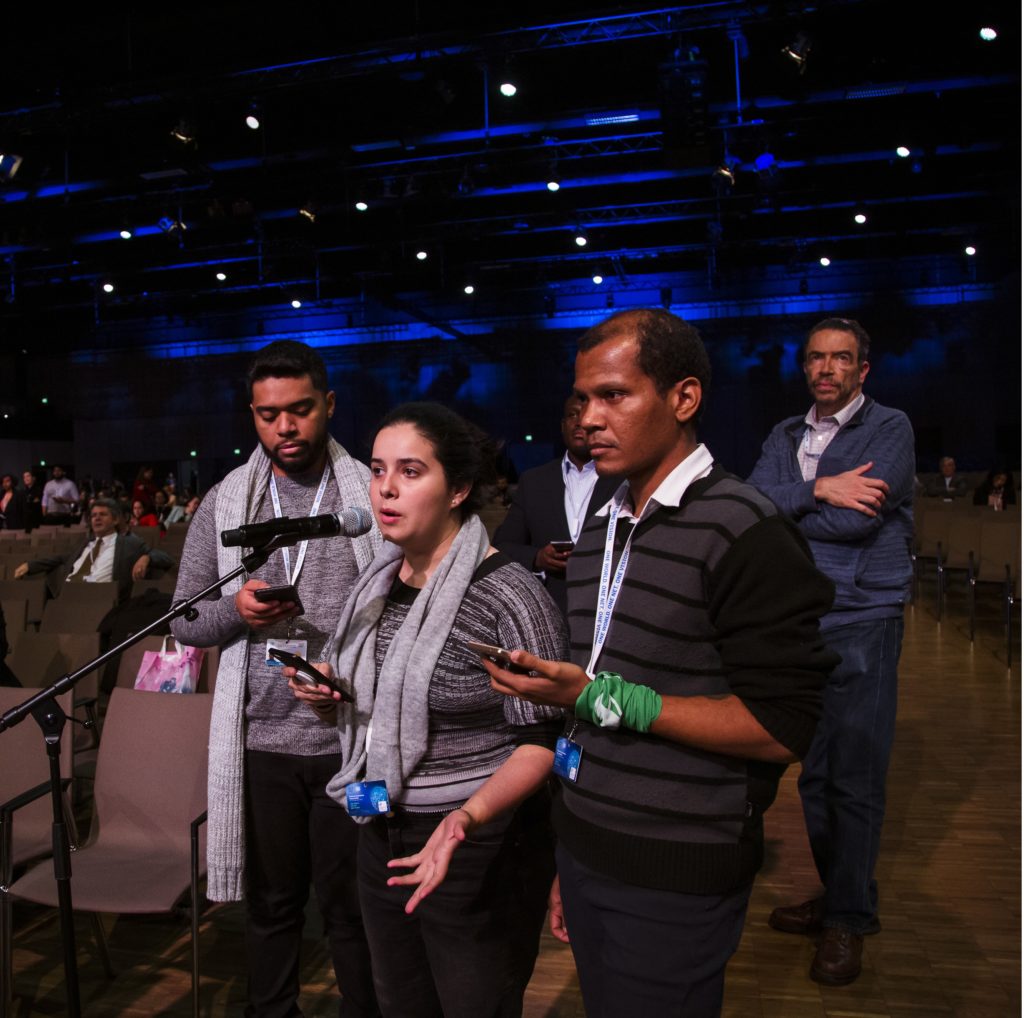
We decided to prepare and attend the Open Mic session at the forum, in order to draw the attention to the Internet policymakers and the lawmakers in our region, so they would make a joint collaboration with the Civil society and the private sector to provide the skills and legal framework to allow women and LGBTQI+ community to freely express themselves regardless their sexual orientation, gender identity, or gender expression.
We also mentioned the lack of representation in the high-level panels regarding trans people. We could verify this by meeting a trans woman, who had been invited to the event. She said she felt that her invitation was due more to filling a gender parity quota rather than an intention to change the event’s participation policies.
We expressed loud and clear that gender implies not only women and girls, but also LGBTQI+ communities. Therefore, we helped to foster that in the upcoming IGFs this is taken into account, so the promise of an Internet for everyone will truly be real, where no one is left behind outside of the picture, and where we could truly comply with the message of One Internet, One Net, and One Vision.
Belén Giménez (Paraguay) Segur@s en Internet Project
Abdías Zambrano (Panamá) Segur@s en Internet Project